
How industries scale: lessons from paper and solar – and what comes next for textiles
Two snapshots, three decades apart.
In the early 1990s, only 40 percent of the paper consumed in Europe was recycled. The infrastructure was patchy, the standards inconsistent, and the idea that fiber-based materials could circulate at industrial scale was, for most people, theoretical. Today, paper and cardboard have a recycling rate of 83 percent in the EU.
Around the same time the paper industry was beginning that climb, solar power was a luxury technology. In 2010, residential solar installations in the U.S. cost about USD 8.70 per watt – a price point that kept it on the margins of the energy system. By 2024, the cost of utility-scale solar had fallen by 87 percent compared to 2010. What was once niche is now one of the cheapest sources of new electricity in most of the world.
Two very different industries, with one shared lesson. Neither happened because of a single breakthrough. Neither was the result of a clever invention or a lucky moment. They happened because the right industrial ecosystem was built in order to successfully scale. Patiently, deliberately, over time. By many actors who agreed to do their part.
Textile fiber is a different material. But the logic is the same.

The boring part is the important part
Paper recycling did not scale because pulping technology suddenly improved. It scaled because municipalities built collection systems, sorting infrastructure expanded, and the value chain – mills, brands, regulators, waste handlers – agreed on common standards for how fiber should move through the system. The European paper industry first defined common strategies to increase recycling in the early 2000s, long before "circular economy" was a phrase anyone outside the industry used. The industry’s historic linear value chains have been giving way to more collaborative structures – with paper and packaging companies working more intensively with retailers, technology experts and partners in and outside the industry.
Solar tells the same story. The technology barely changed. Prices fell not because someone discovered a new way to convert sunlight, but because manufacturing got standardized, supply chains got co-located, and early movers built capacity before the economics were guaranteed. It is a story about industrial discipline.
In both cases, the technology was the easier part. The hardest part was building the system around it, to truly scale.

What it actually looks like to industrialize
There is a temptation, especially in industries that are still proving themselves, to talk about scale as if it is just a bigger version of what already exists and works. It isn't.
At lab and pilot scale, you control the inputs. Feedstock is selected, runs are short. When something goes wrong, you fix it before lunch.
At industrial scale, the variables multiply in every direction. Feedstock arrives from many sources, with different blends, different contamination levels, different histories you cannot fully verify. Processes have to run continuously, not in batches. Energy stops being a line item and becomes a strategic process and cost driver. And the gap between “it works” and “it works reliably, every day, across shifts and seasons” is where most technologies stall. Usually because of the lack of a full ecosystem capable of supportingt hem.
This is the phase Syre is now moving into. Having the right partners for this step is more than an opportunity, it is an operational necessity.
Why JEPLAN and ABB
For Syre, two of those key partners are JEPLAN and ABB. Each addresses a different part of the journey.
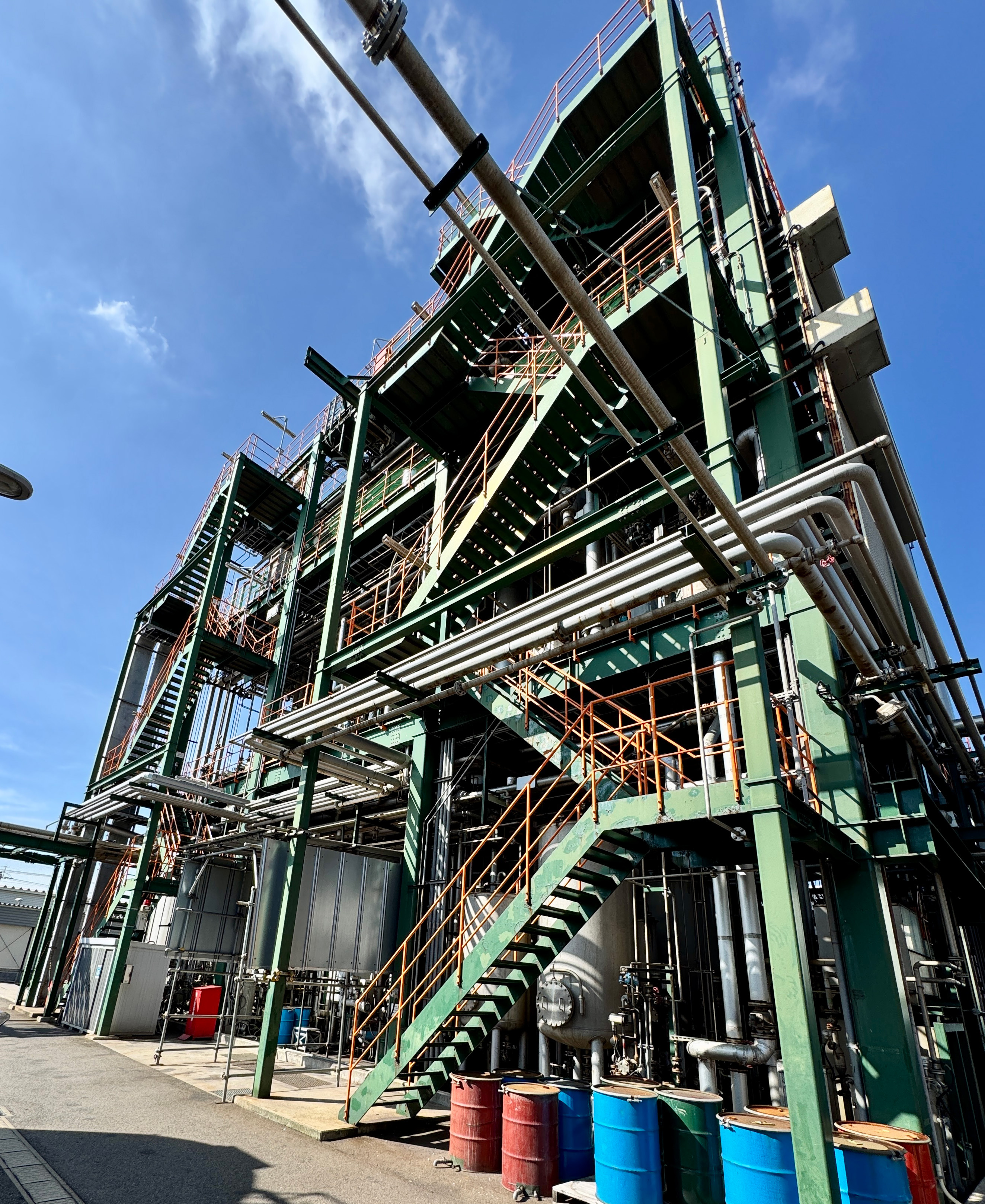
JEPLAN has more than a decade of operational chemical recycling experience. Through their PET chemical recycling plant for textile in Kitakyushu, Japan they have built the kind of know-how that takes years to develop and cannot be shortcut. That experience is now being applied to accelerate Syre's path to commercial textile-to-textile polyester at multi-ton volumes.
ABB brings something different but equally essential: the automation, electrification and process control that determines whether a plant runs at the efficiency levels that make the economics work. It is not a coincidence that ABB has made fiber-based industries a core strategic direction. The industrial expertise built over decades in pulp, paper and chemical processing translates directly into what next-generation fiber plants need – and what the facility we are building in Gia Lai, Vietnam, will require to operate at scale.
Together, they are both key players in the industrial ecosystem that scale requires.
Why this matters now
When solar crossed the threshold that made it competitive with conventional energy, the conversation about it changed overnight. Projects that had been called speculative were suddenly called infrastructure. The early movers who had committed when the economics were not yet obvious found themselves holding assets of significant value.
The same shift is approaching in textile-to-textile recycling. As the transition from pilot to industrial volumes becomes demonstrable – backed by partners with operational track records – the nature of an offtake commitment changes. It stops being a bet on an unproven technology, and becomes an early position in a supply chain that is being built to last.
The paper industry took three decades to climb from 40 to 83 percent recycling rates. Solar took two decades to move from niche to true infrastructure.Textile-to-textile recycling is far beyond the innovation stage and ready to be fully industrially implemented. The path has been walked before, and we are confident that the great textile is shift happening now.