
Dennis Nobelius: Momentum is real, but so are still the industry's structural challenges
This is our tenth issue of The Thread. A newsletter started with the intention to not only share our Syre journey, but to deep dive into all industry wide topics, successes, challenges, and pioneers. Thanks to everyone subscribing, sharing and chipping in with content and encouragement.
First off – we are very proud (and surprised?!) to be appointed as one of the top 250 Green tech Impact companies globally by TIME. This is amazing, and such a testament to the hard work done so far.
We’ve had strong commercial success, led by pioneers Nike, H&M Group, Houdini, and Target – securing close to USD 900 million in offtake agreements. Soon reaching USD 1 billion in secured contracts?! Securing those kinds of commitments and volumes is a great start of The Great Textile Shift, soon making true circularity a reality.
So, momentum is there, but what about the structural challenges? Legislation is coming, but (way too) slowly. Feedstock secondary material exists in vast quantities but is not collected nor sorted under business viable conditions – which is needed for making circularity work at scale (especially not in EU). And funding to scale impact businesses is scarce, for several reasons.
Our CTO Scott Pearson mentioned recently in a discussion (my interpretation): businesses are not built by tech but by scaling. So, what it all comes down to is: what does a business look like at scale? With scale follows impact. Which is the reason we are here. And the reason why we starting our textile plants in South-East Asia, as first step. And the reason why we do not yet build something in the EU nor in the US. These markets are not ready for scale. Yet.
The scale/impact factor is also why we constantly evaluate many different paths. For a business like ours to thrive, the question our CFO Paul Hastings keeps returning to is: what is the 'Rubik's cube' that makes the whole puzzle work and brings scale fastest? Solving it means lining up several things at once – technology, cost, impact, product offer and pricing – and, not least, investors and debt providers willing to fund the scale.
The value of teaming up to drive a change – all brands, collectors, sorters, recyclers, policymakers, and consumers being part of the same system. The challenge is aligning incentives across the value chain to move at the speed needed. We are of the conviction that the transition to circular textiles is not about whether the industry will transform, but whether it can transform fast enough. The demand is there, but the structure and speed have yet to follow.
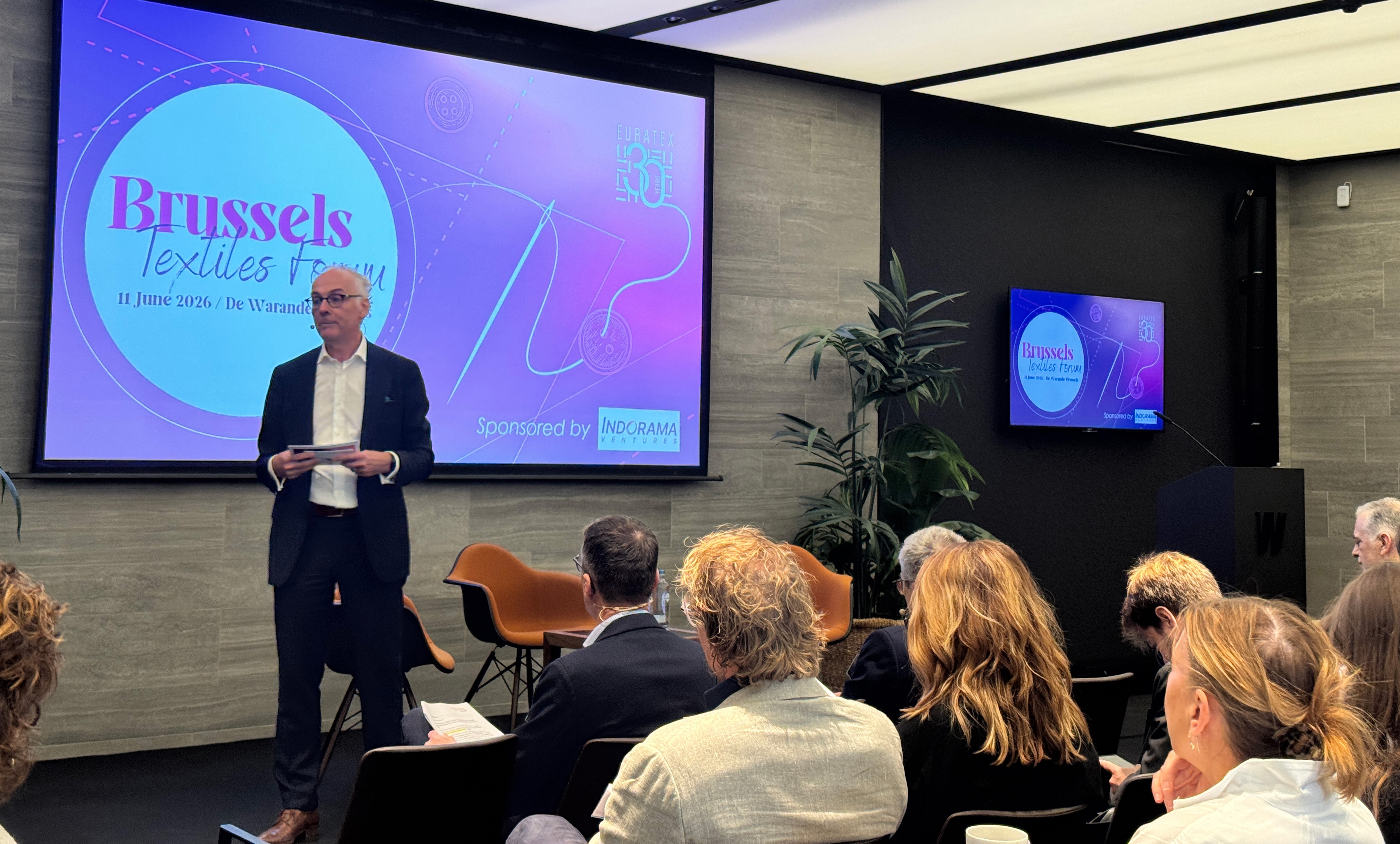
Take funding, one of those structural pieces. Yes, we can certainly see a shift with green impact funds now adding another pillar of robustness – AI, defense, etc. During a recent Green Business Building event organized by McKinsey, they referred to the scaling step as the new ‘Valley of Death’ identifying the need for a new type of investors, since this is not really startup funding nor the typical growth funds. Probably correct. That said, one can clearly see some movements in this area. Most recently EQT is taking over an EU fund oriented in this direction. Anyway, this is likely another structural barrier to overcome to bring about scale and impact.
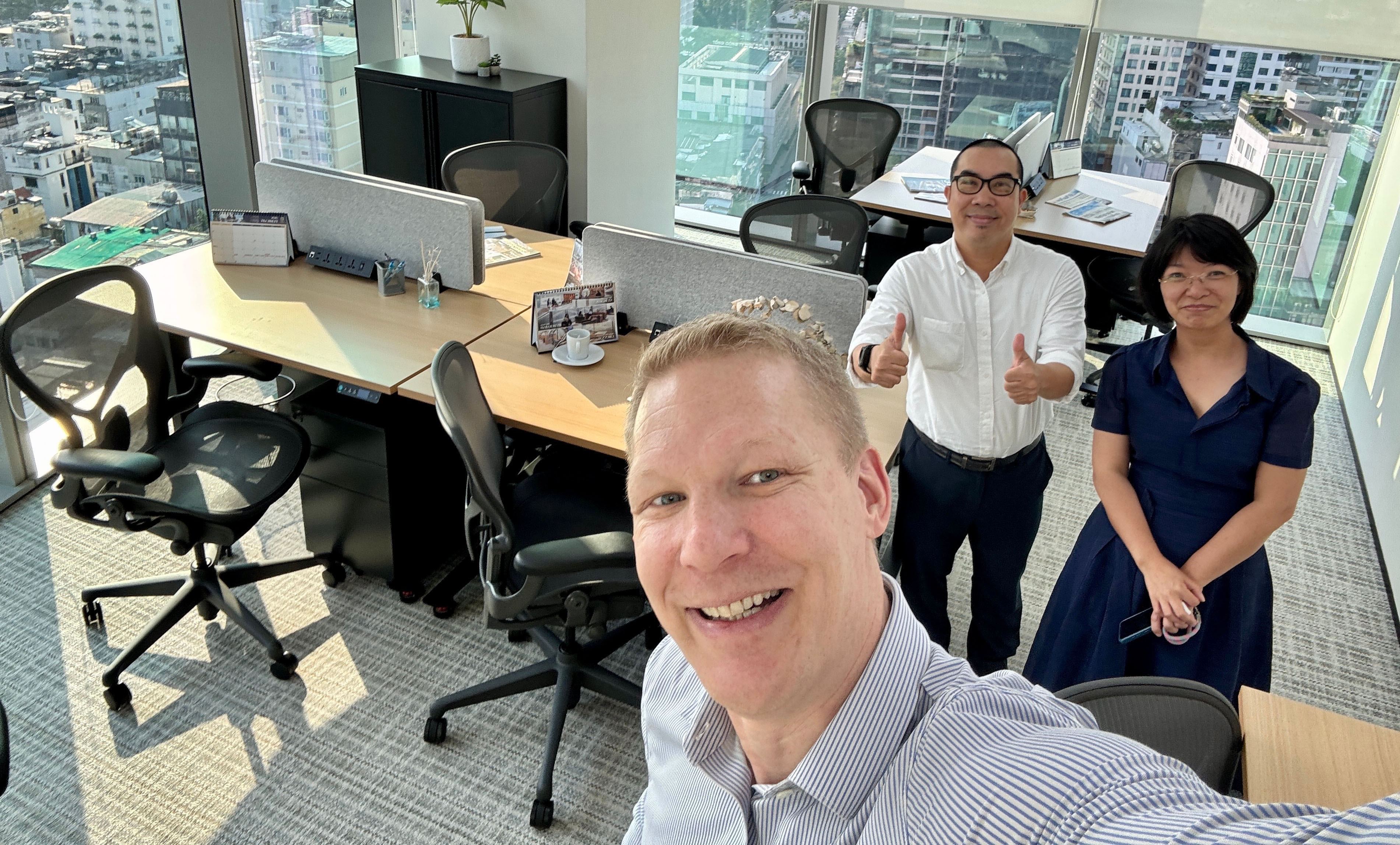
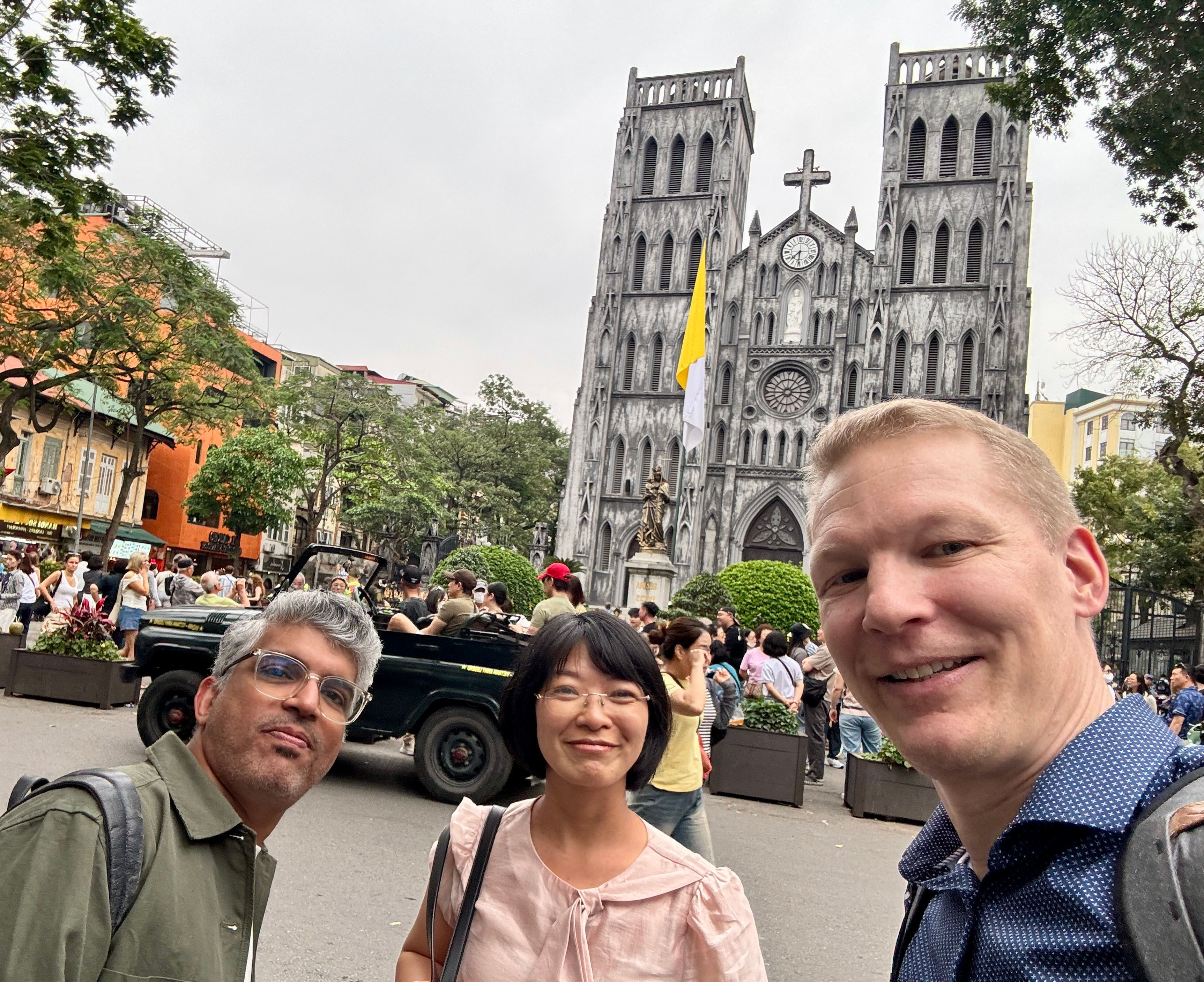
Back then to Syre and our scaling. We have chosen Vietnam as our prime country for the first large scale plant, the first of its kind. This is not easy, we constantly face the dynamics of the business environment creating new challenges, but we also face the openness and the clear ambition to establish a global hub for circular textiles. I was recently travelling in the country again visiting potential partners and investors, all to create stronger local collaborations and to ground ourselves properly in-country. Our offices in Ho Chi Minh City have now been expanded, and we have a strong local core team on site. Within weeks, we’ll also be strengthened by Harsha Vardhan, our Senior Director of Value Chain, relocating alongside other key roles. We feel very confident inour path.
Stepping back and reflecting on the past couple of years, we can clearly see that the industry has moved from ambition to execution. When we started The Thread we shared conversations around what circular textiles could become. Today, the question is no longer whether textile-to-textile recycling is possible – it is how quickly we can jointly scale it. We have enough innovations and pilots, what we need now is industrialization. This is the reason Syre has lately announced global partners like ABB, Selenis, Jeplan, and more to come. Representing true experience and heavy competence in industrializing. Now it’s no longer about expertise in understanding at lab scale, it’s about expertise in scaling. The next chapter won't be won by the companies with the boldest sustainability claims, but by those that can consistently deliver circular productson a commercial scale. Proven big scale operations and a viable business case.
And this is greatly needed in our industry today, the vast majority of textiles (close to 90 percent!) still end up downcycled (bottle-to-textile), landfilled, or incinerated. The gap between what is technically possible and what is happening at scale remains one of the defining challenges of our industry. And why Syre is here. We believe circularity will ultimately succeed. Not because it is environmentally necessary but because it becomes economically irresistible.
We still have some roads to cross, and here is also the relation to scale imperative driving down cost over time. What is interesting though on the business side is that right now – circular material provides a hedging alternative. This means, for a big brand putting a certain percent into circular material also means putting that volume into a bucket not necessarily correlated to the price of oil. Related to polyester. The world’s by far most used fiber. And in recent months, the value of resilience is clear.
Looking forward to the next ten issues and how far we will have come then.
Onwards!
Dennis