
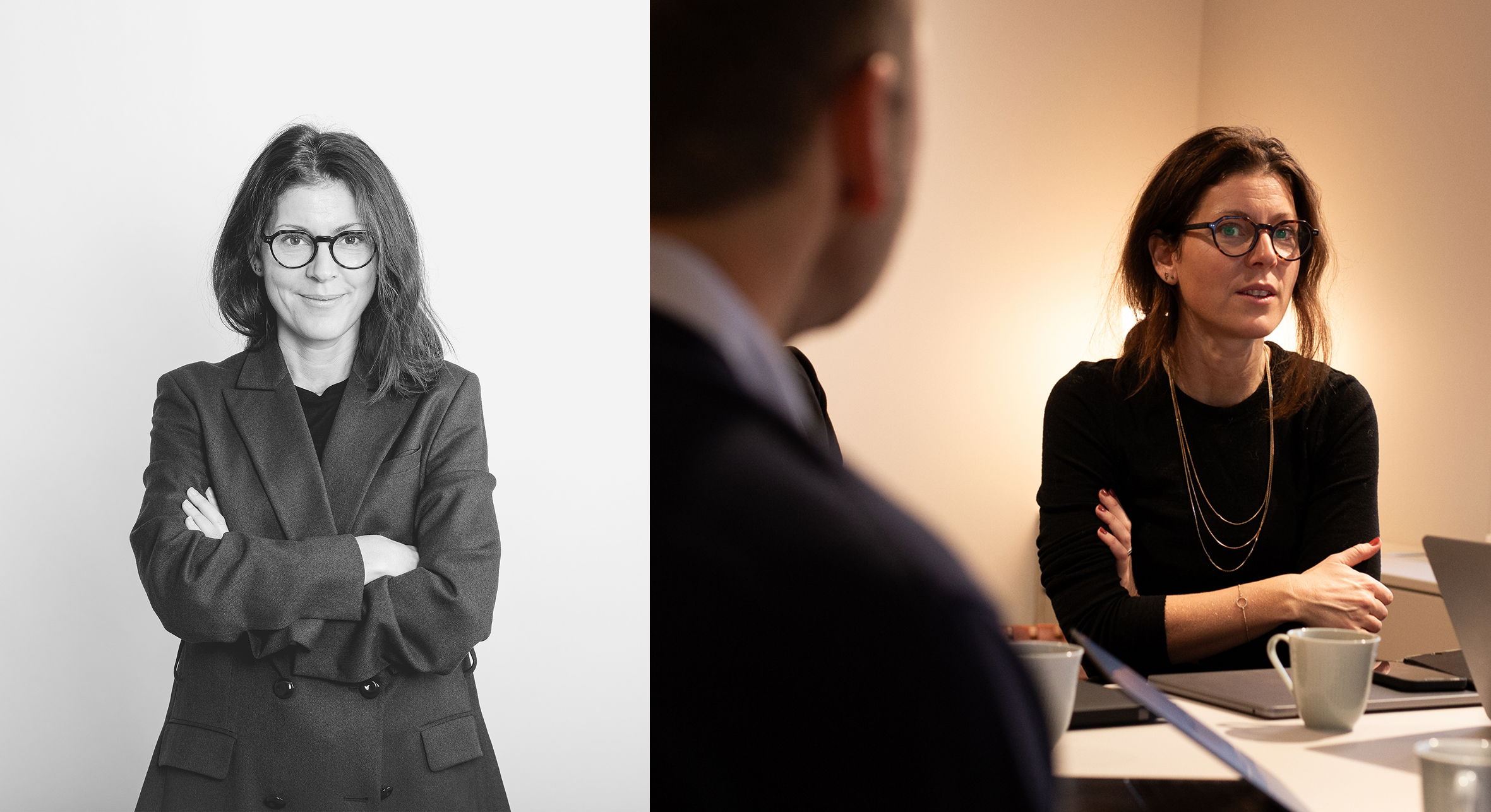
Decided, not done: Syre’s Stina Billinger on why Europe isn’t moving fast enough
Stina Billinger was one of the very first to join Syre, and she had three clear reasons. First, after serving as a State Secretary in the Swedish government, she spent a cooling-off year seeking advice from people she trusted. One piece stuck: if you've never helped scale a company fast, do it – it teaches you a new way of thinking about risk and growth.
“Working in government makes you very good at minimizing risk. I wanted to train thepart of the brain that thinks fast, thinks big and looks for possibilities,because our response to climate change needs to be far more exponential,” she says.
Secondly, she also sees circularity as the next major sustainability shift, after electrification and renewable energy, and wanted to work hands-on with materials. And finally, there was the people: “I have enormous trust in my colleagues, and I have a lot of fun at work every day.”
At Syre, Stina leads sustainability and the company’s impact commitment, from sustainable supply chains and the people in them to life-cycle assessments, the decarbonization plan and the ambition to go fully circular without waste. She also leads public affairs, pushing the EU and governments worldwide for faster policy on circular textiles.
Here, she reflects on how the conversation on textile circularity has changed, and why the challenge is no longer acceptance, but speed.
What has changed most in the conversation about textile circularity over the past twelve months?
Circularity has gone from being treated as something fluffy – a kind of alternative economy– to a fully established concept. You see it in the EU with initiatives like the Circular Economy Act, it's now treated as a natural vehicle for growth, and something we simply must do. The EU’s Textile Strategy is another example ofhow ambitious and far-reaching this shift has become. If regulations introducing mandatory recycled content move forward, it could provide a real boost to recycled materials, accelerate investment across the value chain, and deliver significant environmental benefits. The problem isn't acceptance anymore. It's that we're not moving fast enough to act on it – and that gap is where my frustration sits these days
You’ve said the decisions are made – so where does the slowness show most?
Here'sthe thing: Europe has actually made the decisions. The Waste Shipment Regulation, the Waste Directive with mandatory textile collection, the Ecodesign Requirements – the legislation is there. But now the Extended Producer Responsibility needs to be implemented in the member states and hopefully harmonized amongst them as well. And the details of the Ecodesign requirements are being developed for textiles, in the Delegated Act, which has been delayed. From announced to implemented can take three to five years – too slow against global competition.
At some point you have to start somewhere, rather than let the perfect become the enemy of the good.
Which question will be decisive for the industry in the years ahead?
What it takes for investors to commit at scale. Investors, brands and recyclers have to believe the demand signal is real – and legislators don't always grasp that. And to be very specific: For polyester, that means ambitious recycled-content targets in the Ecodesign delegated act, with sub-targets for textile-to-textile, and only a short transition period for open loop.
I'd also challenge the 'made in Europe' reflex. It does not work for textiles. A functioning global market for circular textiles will mean Europe and Asiaworking closely together, and being able to trade secondary material – because when waste isn't waste but a recyclable raw material, we need to be able to move it to where it can be upcycled or repurposed.
And where do you find the most hope right now?
The pace in parts of Asia, honestly. Several countries are taking on circularity faster than we are – and it makes sense: in populous places there's an enormous amount of material to capture, and recycling those waste streams improves people's lives immediately. That makes it genuinely attractive, not just virtuous. And when I want to feel optimistic, I look at what happened with renewable energy. Growth there isn't politically charged anymore – it doesn't wait for a political decision, it just rolls on, because it makes economic sense. That's the moment I'm waiting for in textiles: when circular material stops needing policy support and simply becomes the obvious choice.